Exhibitions, conferences and business events can be a great way to meet new customers, catch up with existing ones and get your brand in front of the right people. But there’s a lot to think about.
From choosing the right event and planning your stand to ordering merchandise, briefing your team and following up afterwards, it’s often the smaller details that get forgotten.
At Steel City, we regularly help customers prepare for exhibitions and events, whether they’re exhibiting at a larger show or organising an event of their own. From branded stands and clothing to delegate gifts and promotional merchandise, we’ve pulled together some of the things we’ve learnt along the way to help make planning your next event that little bit easier.

We’ve also created a FREE Exhibition & Event Planning Toolkit to help you put all of this into practice.
It includes our printable Exhibition & Event Planning Checklist, plus access to an editable Excel Event Planner to help you manage deadlines, your packing list, leads, follow-ups and results.
Get the FREE Event Planning Toolkit at the bottom of this page.
Planning an Exhibition or Event? Start Here
1. Start with the right event
Whether you’re choosing an exhibition to attend or planning an event of your own, start by thinking about who you want to be there and what will make it worthwhile.
If you’re exhibiting, look at who usually attends, how many visitors are expected, where your stand will be located and what’s included in the stand price.
If you’re hosting your own event, think about your guest list, venue, capacity, timings and what will give people a reason to attend.
Whichever type of event you’re planning, make sure the audience is right for what you’re trying to achieve before you start spending the rest of your budget.
2. Decide what you want to achieve – and what you want to spend
Before you start choosing stand graphics or ordering giveaways, decide what would make the event a success.
Your objective might be to:
- Generate new sales leads
- Meet potential customers
- Catch up with existing customers
- Launch a new product or service
- Recruit new employees
- Increase awareness of your brand
Having a clear objective makes the rest of your decisions much easier. It should influence everything from how you promote the event to the merchandise you choose and how you capture leads.
Once you know what you’re trying to achieve, decide where your budget is going to have the most impact.
You don’t necessarily need the biggest stand or most expensive giveaway in the room. It’s about spending your budget on the things most likely to help you achieve your objective.
One tip: Keep a little of your budget aside for unexpected costs. Last-minute printing, extra deliveries or something you’ve forgotten can quickly add up in the final run-up to an event.

3. Give yourself enough time
The earlier you start planning, the more choice you’ll have – particularly when it comes to your stand, printed materials and branded merchandise.
A few months before, concentrate on booking your space, agreeing your objectives and deciding who’ll attend.
Around four to six weeks before the event is a good time to finalise your stand graphics, branded clothing, merchandise and printed materials. You can also start promoting your attendance and decide how you’re going to capture leads on the day.
In the final week or two, you should hopefully just be checking deliveries, confirming travel and set-up arrangements and briefing the team rather than making any big decisions.
Of course, things don’t always work out like that!
If your event has crept up on you, don’t panic. There are often UK-made and UK-stocked merchandise options available when you’re working to a shorter lead time.
Explore UK-Made Promotional Merchandise
4. Plan your event space
Whether you’re exhibiting or hosting your own event, think about the experience you want people to have when they arrive. What will they see first? Is it clear where they need to go and what you want them to do? And where can your branding help create the right impression?
If you’re exhibiting, put yourself in the shoes of somebody walking past your stand. Can they immediately tell who you are and what you do? Is your key message clear? Does the stand feel welcoming? You don’t necessarily need the biggest or most elaborate stand in the room to get noticed – clear signage, a strong message and a few well-chosen displays can often work much better than trying to fill every available bit of space.
Another point to consider is – do you have a reason for someone to stop. A competition, demonstration, game, interesting product or useful piece of merchandise can all help start a conversation. Whatever you choose, make sure you have thought about how you can utilise the interaction you have created. For example, if somebody enters your competition, scans a QR code or picks up a giveaway, how does that turn into a useful touch point with your team?
If you’re hosting your own event, look at the whole guest journey. Where will people register or be welcomed? Is it obvious where they need to go? Could branded signage help with directions? Will there be merchandise or a welcome pack waiting for them? Consider the spaces where people will spend their time too, from networking areas and tables to stages and refreshment points.
And whichever type of event you’re planning, don’t forget the practicalities. Power, Wi-Fi, storage, deliveries and where you’re going to put all those boxes might not be the exciting part, but they’re much easier to sort out beforehand!
If you’re exhibiting, we’ve covered the stand itself in more detail in our guide to setting up a conference stand.
5. Promote your attendance before the event
Don’t wait until the doors open to tell people you’re going to be there.
Share your stand number on social media, mention the event in your emails and invite customers or prospects you’d particularly like to see.
If you’re launching something new, running a competition or taking something interesting with you, give people a sneak peek. It gives you another reason to talk about the event and can encourage people to actively seek you out on the day.
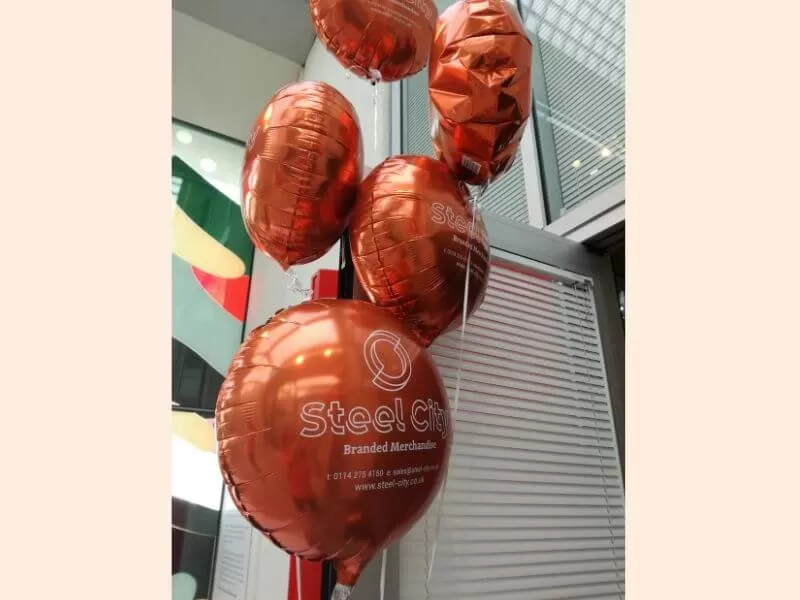
You can also use merchandise before the event to give people an extra reason to attend.
We’ve used this ourselves in a couple of different ways. For one event, the first 150 people to register received a free branded Americano travel mug. For another, we sent invitations with a branded sweet bag and asked recipients to bring it along on the day to fill up from our pick ‘n’ mix.
Both gave us something a little different to talk about before the event and made the invitation or registration more memorable.
Think about whether there’s something you could offer in advance, or a gift that needs to be collected, completed or redeemed when someone visits you on the day.
And if there are particular customers or prospects you’d like to see, you could arrange meetings in advance, which means you’ve already got some useful conversations in the diary before the event begins.

6. Think about what your event merchandise needs to do
We supply a lot of branded merchandise for exhibitions and events, and one of our biggest pieces of advice is simple:
Don’t start with the product. Start with what you want it to achieve.
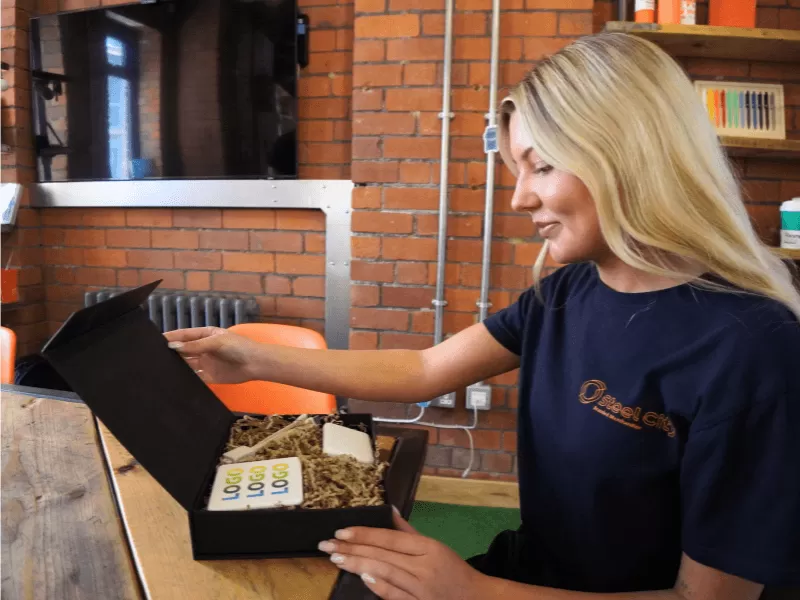
You might need an affordable giveaway for exhibition visitors, something useful for every conference delegate, a welcome gift waiting for guests when they arrive or a higher-value product for speakers, VIPs or your strongest prospects.
You don’t necessarily have to give the same thing to everybody either.
Some of our customers choose a lower-cost product that can be given out more widely and keep a smaller number of higher-value gifts for qualified prospects, existing customers or particularly good conversations.
Whatever you choose, think about the person receiving it. Is it relevant to them? Can they easily carry it around the exhibition? Is it useful? Would they actually choose to keep it?
The branding can make a big difference too.
For some exhibition giveaways, a big, bold logo is exactly what you want. But if you’re giving away clothing, drinkware or something a little more premium, think beyond simply adding your logo. A subtler design, something that reflects your company culture, or even a collaboration with a local artist or photographer can turn it into something the recipient might genuinely have chosen for themselves.
Ultimately, the best event merchandise shouldn’t only work while somebody is standing at your exhibition stand. If it’s taken away, kept and used afterwards, your brand can continue to be seen long after the event has finished.
Explore our Exhibition & Conference Merchandise
Not sure what to choose? Take a look at our Event Merchandise Guide for more advice and ideas.
7. Have a plan for capturing and qualifying leads
You’ve had a brilliant conversation with somebody on your stand. They walk away. What happens next?
It’s worth deciding how you’re going to capture leads before you arrive at the event.
Your event might have its own lead-scanning system, or you could use your CRM, an online form, a QR code, a competition entry or even good old-fashioned notebooks!
The technology matters less than making sure you record enough information to remember who you spoke to and what you talked about.
It’s also worth agreeing beforehand what actually makes somebody a good lead.
If your team can distinguish between someone who stopped for a free pen and someone who’s genuinely interested in working with you, it’ll make your follow-up much more effective.
Think about what you’d like visitors to do next too.
A QR code can take them straight to a relevant page on your website, a downloadable guide, a competition, a meeting booking page or your LinkedIn profile. They can be added to stand graphics and printed materials and, depending on the print area, even some promotional products.
Whatever you’re linking to, make sure there’s a reason for somebody to scan it – and always test it before anything goes to print!
8. Make sure everyone knows the plan
Everyone representing your business at the event should know what you’re trying to achieve, who you particularly want to speak to and what you’re promoting.
Agree how leads will be captured, who is responsible for what and how you’re going to cover breaks. If you’re wearing branded clothing, make sure everybody knows what they’re expected to wear too.
It doesn’t need to be a huge formal briefing. Ten minutes before the event can make a big difference if everyone knows the plan.
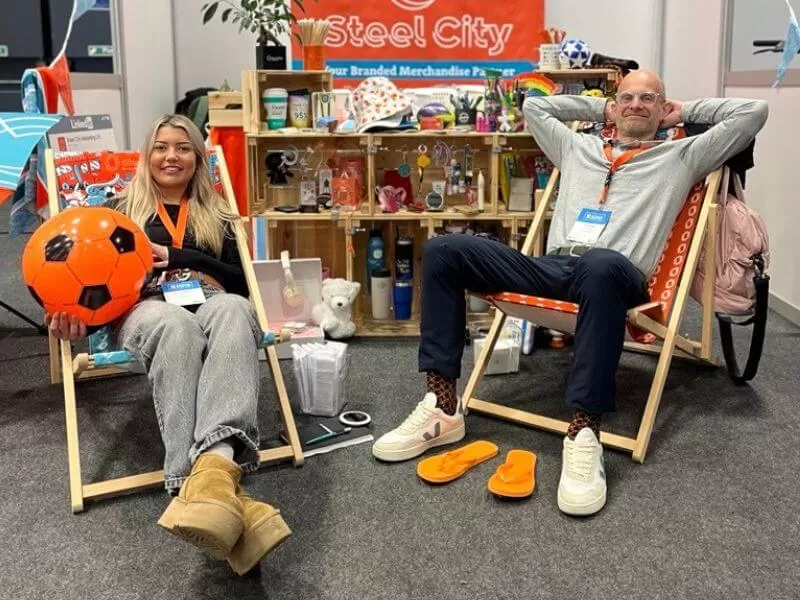
And one final thing – try not to spend the day hiding behind a laptop or looking at your phone. It sounds obvious, but we’ve all walked past those stands!
Don’t forget to capture some content while you’re there too. Take photos of your stand and team, and grab a few short videos throughout the day. You’ll have useful content to share during and after the event – and it’s much easier to remember if somebody has been given the job beforehand.
9. Remember the boring but important bits
Unfortunately, event planning isn’t all merchandise and fancy stands.
Check your exhibitor access and set-up times, parking and delivery instructions before you travel. Find out what the venue provides and what you’ll need to bring yourself, particularly things like power, Wi-Fi, extension leads and chargers.
It’s also worth thinking about what happens at the other end of the event.
Who’s taking the stand materials back? What are you doing with any leftover merchandise? And is somebody actually able to fit all those boxes in their car?
Wherever possible, have your merchandise, printed materials and other important items delivered early enough for you to check everything before you need it.
Nobody wants to discover something is missing while they’re setting up their stand at 7am!
10. Follow up while people still remember you
Packing the stand away isn’t the end of the event.
You’ve invested time and money getting there, so make sure you follow up the conversations you’ve had while they’re still fresh.
Prioritise your strongest leads and make the follow-up personal. If you talked about a particular product, problem or project, mention it. If you promised to send something, send it.
You can also connect with people on LinkedIn and use photos and videos from the event to keep the conversation going on social media.
Then go back to the objectives you set at the beginning. How many useful conversations did you have? How many leads or enquiries did you generate? Did any turn into meetings or orders?
It’s worth having a quick debrief with everyone who attended too. What worked well? What questions kept coming up? Was there anything you’d change about the stand, merchandise or how you approached the day?
Make a few notes after the event – it’ll make planning your next one much easier.
Event Planning FAQs
For a larger exhibition, it’s worth starting a few months in advance. Smaller events can often be organised much more quickly, but planning early gives you more choice when it comes to your stand, merchandise and marketing.
As well as your stand and displays, think about branded clothing, merchandise, printed information, lead capture and the practical things your team will need on the day.
Chargers, extension leads, stationery and somewhere to hide everyone’s bags aren’t particularly exciting, but you’ll be glad you’ve got them!
There’s no single giveaway that’s right for every event. It depends on who you’re trying to reach, what you want the product to achieve, how many you need and your budget.
We generally recommend choosing something that’s relevant to your audience, useful and likely to be kept after the event.
Use whatever works for your team. It could be the organiser’s lead scanner, your CRM, an online form, QR code or simply taking notes. The important thing is recording who you’ve spoken to, what you discussed and what needs to happen next.
More Event Planning Advice
Planning an exhibition, conference or event? You might also find these useful:
- How to Choose Event Merchandise to Qualify Leads & Win Business
- How to Choose High-Volume Event Giveaways That Maximise Exposure
- Event Merchandising – 5 Tips for Promotional Success
Your FREE Exhibition & Event Planning Toolkit
There’s a lot to remember when you’re exhibiting or organising an event, so we’ve put together two practical tools to help you plan it.
You’ll get our Exhibition & Event Planning Checklist to download, save or print and tick off as you go. Inside the checklist, you’ll also find a link to our editable Excel Event Planner, which you can use to manage deadlines, your packing list, leads, follow-ups and results.
Simply enter your details below and we’ll send your Event Planning Toolkit straight to your inbox.
Need help with your event merchandise?
If the merchandise is still sitting on your to-do list, tell us a little about your event, who you’re trying to reach and roughly how many people you’re expecting.