


Branded merchandise can play a quiet but powerful role in company culture – helping people feel included, recognised, and motivated right from the start.
James Biggin shares practical ways branded merchandise can be used internally to support teams.
Company culture isn’t just what you say or write down, it’s how people feel day to day.
Feeling valued, recognised, and part of something bigger has a direct impact on motivation, engagement, and retention. One often overlooked tool that can support this is branded merchandise.
When used thoughtfully, branded products can help reinforce company culture, strengthen team connection, and encourage better performance – whatever the size of your business.
Why branded merchandise matters internally
Often associated with events, marketing campaigns, or client giveaways, branded merchandise can be just as powerful when used internally.
Research consistently shows that promotional products are remembered far longer than most forms of advertising, with around 85-90% of people able to recall the brand on a promotional item they’ve received. That long-term visibility makes branded merchandise particularly effective when used to support people, not just promotion.
When employees regularly use branded items, those products become part of their everyday working life: reinforcing familiarity, pride, and connection to the business.

6 ways to use branded merchandise internally
1. Helping new starters feel part of the team
Starting a new job can be overwhelming. Even small, practical touches can make a big difference in how welcome someone feels.
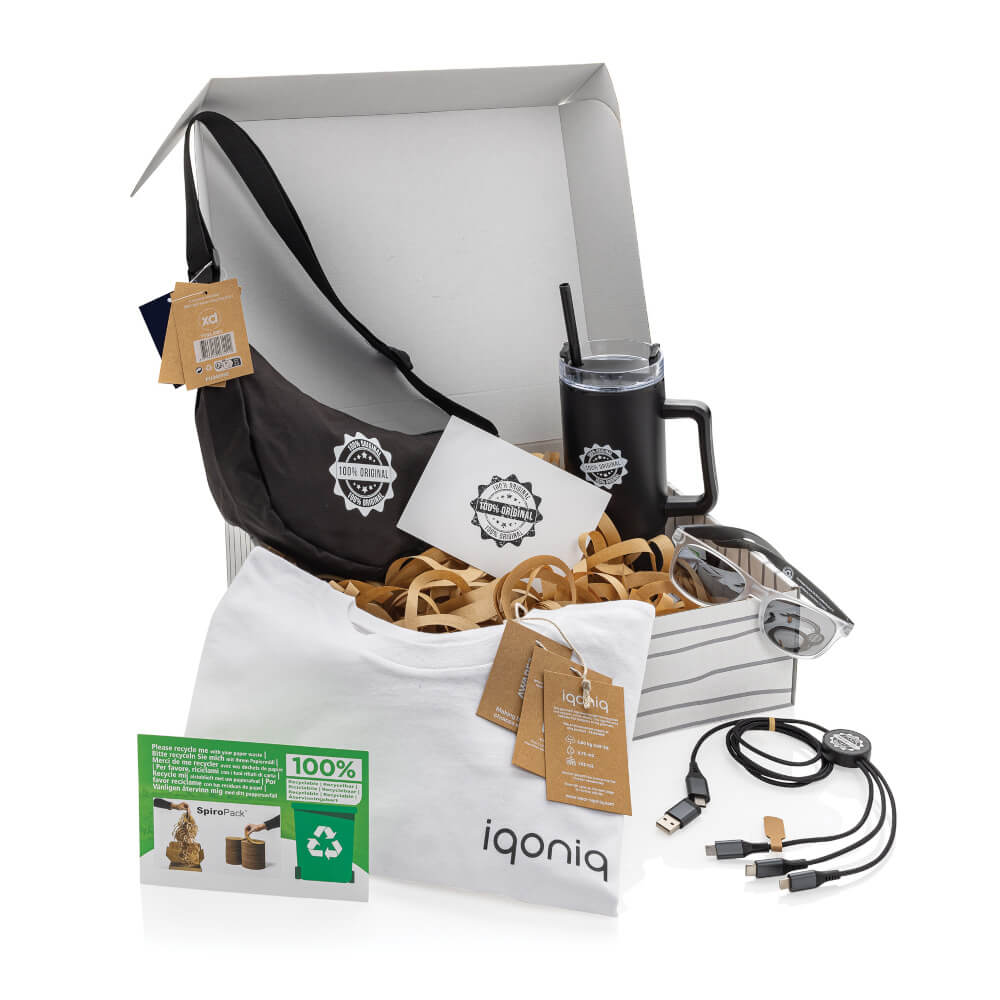
For businesses looking to formalise this approach, branded merchandise is often used as part of a wider new-starter experience, such as structured welcome packs designed to support people from day one.
Branded merchandise can help new starters:
- Feel included from the start
- Identify as part of the team more quickly
- Settle into the culture of the business
Items such as branded clothing, notebooks, drinkware, or everyday desk essentials give people something useful straight away — not just something to look at.
Industry data shows that around 87% of people keep promotional products for more than a year, meaning these items continue to reinforce belonging well beyond the first week.
2. Reinforcing belonging beyond the office
One of the strengths of branded merchandise is that it doesn’t stay confined to the workplace. When people use branded items at home, while commuting, or in their day-to-day routines, it:
- Reinforces pride in the business
- Strengthens emotional connection to the brand
- Extends company culture beyond office walls
Because promotional products typically have higher brand recall than many digital channels, this everyday visibility helps keep the business top of mind – internally as well as externally.
3. Rewarding staff and recognising effort
Recognition doesn’t always need to be financial to be effective. Branded merchandise can be used to:
- Reward performance
- Recognise extra effort
- Mark milestones or achievements
A well-chosen branded item acts as a lasting reminder of recognition, something that doesn’t disappear as quickly as a message or email. Studies show that over 60% of employees feel more appreciated when they receive branded merchandise, and more than half say it makes them feel more connected to their organisation.
4. Adding impact through personalisation
Personalisation adds a layer of thoughtfulness that generic branded merchandise often lacks.
Adding a name, role, team, or milestone turns a standard product into something that feels considered rather than issued. It helps people feel recognised as individuals, not just part of a headcount, and strengthens their emotional connection to the business.
This approach works particularly well at meaningful moments, such as welcoming new starters, recognising work anniversaries, celebrating performance, or marking individual and team achievements. In these situations, personalised items are more likely to be kept and used, turning everyday products into lasting reminders of appreciation.
See more individualised promotional products.
5. Creating incentives that motivate
Incentives work best when the reward feels desirable, useful, and earned. Branded merchandise can support incentive schemes by:
- Offering tiered rewards
- Supporting short-term campaigns
- Encouraging healthy competition
Because promotional products typically deliver a low cost per impression and have a long lifespan, they often provide better long-term value than short-lived incentives – especially when quality is prioritised.
Low-quality items can undermine motivation, while thoughtful, well-made products reinforce positive behaviours.
6. Supporting company culture at any size
Branded merchandise works best when it supports a wider onboarding and engagement strategy, rather than sitting in isolation. You don’t need a large HR team or big budgets to use branded merchandise effectively. Smaller businesses can use it to:
- Build team identity
- Create consistency as growing
- Shape culture intentionally
Larger organisations can use it to:
- Maintain connection across teams, departments or locations
- Reinforce shared values
- Support engagement initiatives at scale
The size of the business matters far less than the consistency and intent behind the approach.
Making Branded Merchandise Work for Your Culture
To get real value from branded merchandise internally, it’s worth asking:
- Would I genuinely use this myself?
- Does this reflect how we want people to feel?
- Is this supporting behaviour, not just branding?
When the answer is yes, branded merchandise becomes more than a logo, it becomes part of the employee experience.
FAQs
How does branded merchandise help build company culture?
Branded merchandise helps people feel included, valued, and part of the team. Practical, well-chosen items reinforce belonging and create positive daily touchpoints with the brand.
Is branded merchandise effective for employee engagement?
Yes. Promotional products are remembered for long periods and create positive brand associations, which can increase feelings of appreciation and engagement when used internally.
What types of branded products work best for company culture?
Useful, well-made items tend to work best. Popular options include branded clothing, drinkware, notebooks, desk items, gadgets, and lifestyle products people will use regularly.
Can small businesses use branded merchandise to improve culture?
Yes! Small businesses can use branded merchandise to build identity, reinforce values, and strengthen team connection.
Is branded merchandise better than cash rewards?
Branded merchandise isn’t a replacement for pay or bonuses, but it complements them well. Tangible items often act as lasting reminders of recognition, and are a thoughtful, memorable addition to monetary rewards.
How often should branded merchandise be used internally?
It works best when used consistently, supporting onboarding, recognition, incentives, milestones, and team initiatives throughout the year.
What should businesses avoid when using branded merchandise?
Low-quality or irrelevant products can undermine the message. If people wouldn’t genuinely use the item, it’s unlikely to support engagement or culture.
Does branded merchandise work for remote or hybrid teams?
Yes. Branded merchandise helps maintain connection and shared identity for remote and hybrid teams by creating a physical link to the business.
Final Thoughts
While promotional products are often thought of in marketing terms, their influence on culture and engagement is measurable. From high recall rates to strong emotional responses and increased feelings of inclusion, branded merchandise can be a strategic part of your company culture toolkit.
You may also find our guides on welcome packs and the onboarding process useful when planning your internal branded merchandise strategy.



Leave A Comment